



Hotel Lobby Design Trends in Dubai: Creating First Impressions That Convert (2026)
Hotel lobby design trends in Dubai focus on creating strong first impressions through experience-led layouts, Instagrammable visual anchors, layered lighting, and flexible social spaces. Modern hotel lobbies are no longer passive waiting areas but active brand environments that influence guest perception, online reviews, and booking decisions. In boutique and lifestyle hotels, lobby design directly impacts engagement, dwell time, and revenue performance.
Why the Lobby Matters More Than Any Other Space
In hospitality, guests decide how they feel about your hotel before they reach their room.
That decision happens in the lobby.
In Dubai’s highly competitive hotel market, the lobby is no longer:
- A check-in zone
- A circulation space
- A background environment
It is now a brand statement, a social stage, and a marketing engine.
This is why hotel developers and operators investing in hotel interior design in the UAE are prioritizing lobby design as a strategic asset rather than a decorative one.
The Evolution of Hotel Lobby Design in Dubai
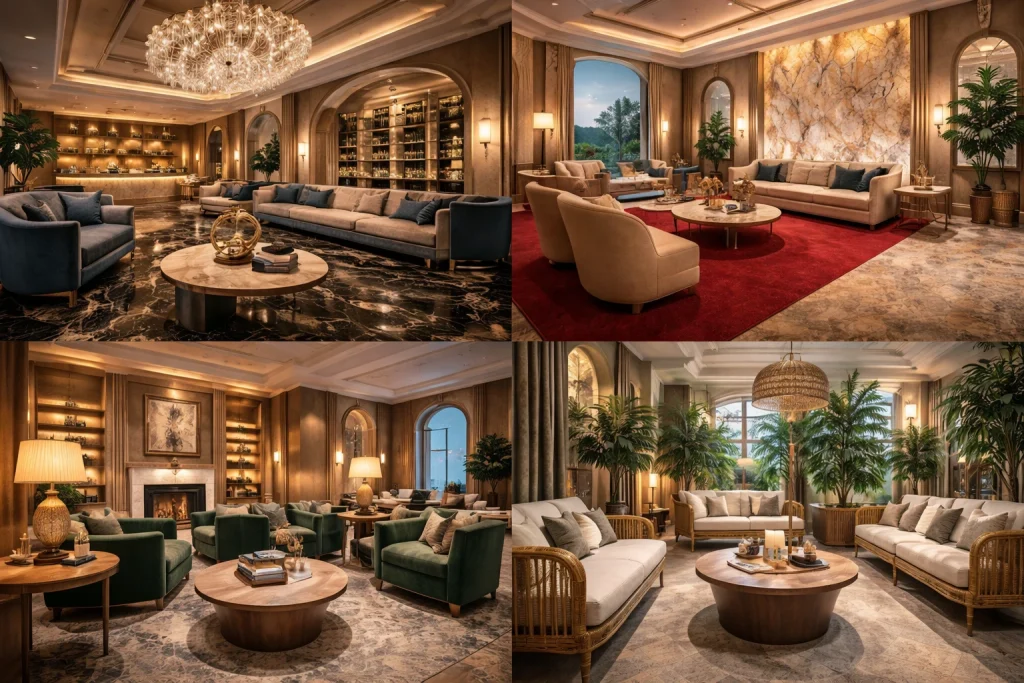
Dubai hotels once favored:
- Large, formal reception desks
- Grand but empty spaces
- Minimal interaction zones
In 2026, this approach is outdated.
Today’s successful hotels design lobbies that:
- Encourage guests to pause, sit, and engage
- Create visual moments worth photographing
- Blend hospitality, retail, and social behavior
This shift aligns strongly with boutique hotel design principles, where experience matters more than scale.
Trend 1: The Lobby as a Social & Lifestyle Hub
What’s Changing
Hotel lobbies in Dubai are being redesigned as:
- Lounge style environments
- Cafe inspired meeting spaces
- Informal social zones
Instead of pushing guests through the lobby, designers are inviting them to stay.
Why This Works
- Increased dwell time
- Higher food and beverage interaction
- More organic social media exposure
From a design perspective, this requires:
- Comfortable seating clusters
- Human scale furniture
- Flexible circulation
This approach directly supports boutique hospitality positioning and improves guest satisfaction.
Trend 2: Statement Reception Desks as Brand Anchors
The Old Way
Reception desks were once designed to be functional and discreet.
The New Reality
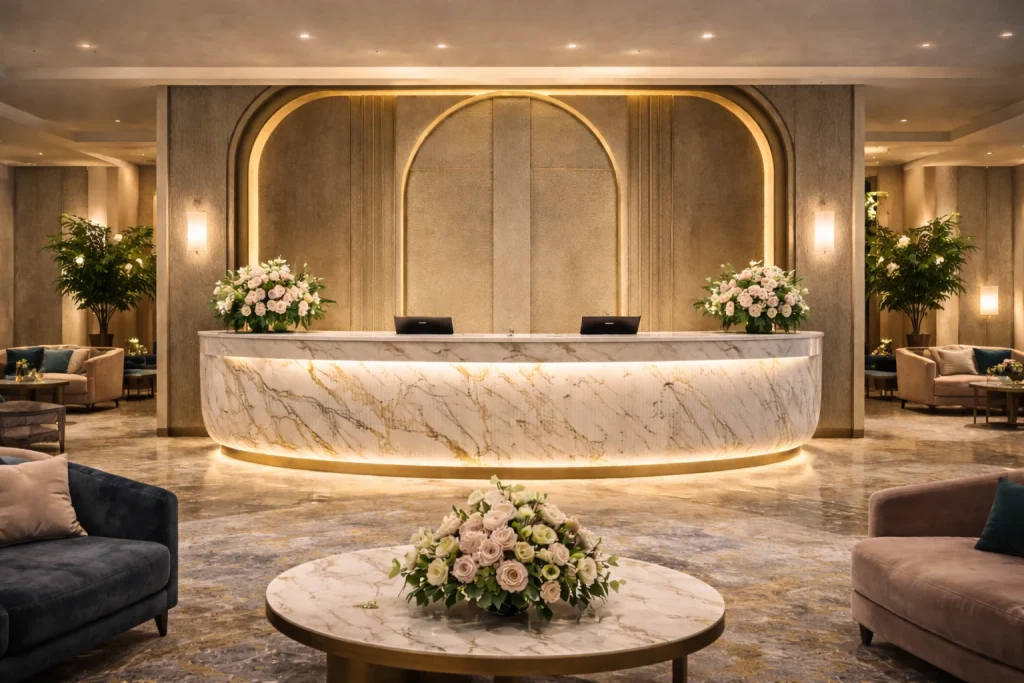
In Dubai, the reception desk is now:
- Sculptural
- Material-driven
- A visual anchor for photography
Designers are using:
- Natural stone
- Textured finishes
- Integrated lighting
The goal is not efficiency alone, but identity.
In experience led hotels, the reception desk often becomes the most photographed feature in the lobby.
Trend 3: Lighting Designed for Photography and Emotion
Lighting is no longer just a technical requirement.
It is a marketing tool.
Key Lighting Strategies in Dubai Hotel Lobbies
- Warm ambient lighting for skin tones
- Accent lighting to highlight textures
- Feature pendants or installations for drama
- Day-to-night lighting transitions
Hotels that ignore lighting design often look flat on camera, reducing shareability and online engagement.
This is a critical factor in hotel interior design UAE projects targeting modern travelers.
Trend 4: Local Identity Without Cultural Cliches
Dubai hospitality design is moving toward subtle localization.
Rather than obvious themes, designers integrate:
- Regional textures
- Abstracted Arabic patterns
- Local material references
The result:
- Global luxury appeal
- Authentic regional character
This balance is especially important for boutique hotels aiming to stand out without alienating international guests.
Trend 5: Flexible & Modular Lobby Layouts
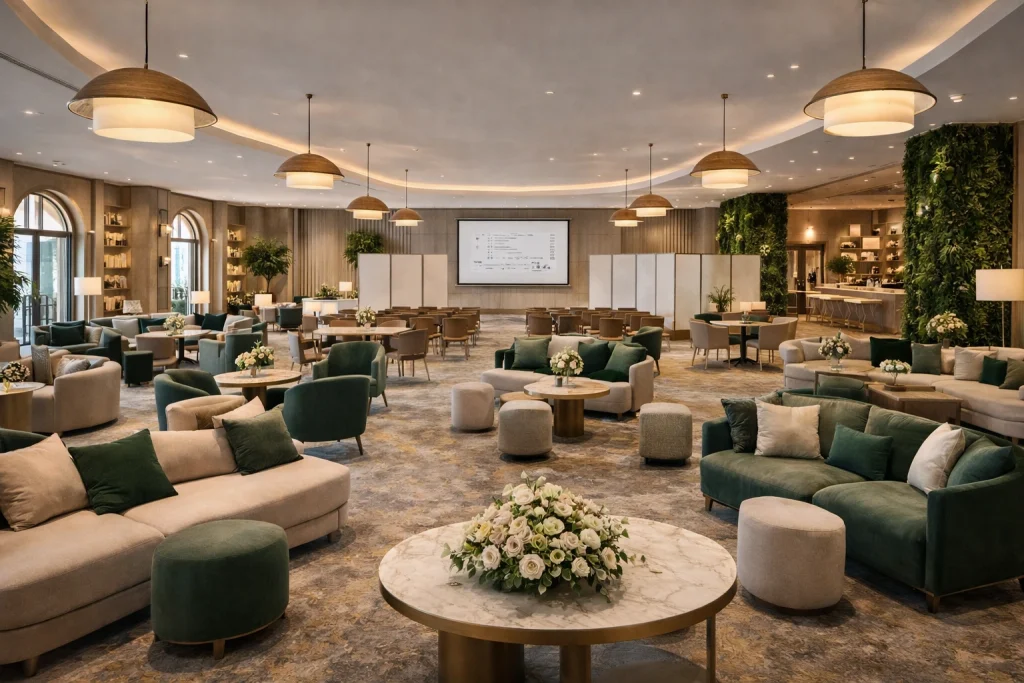
Hotels in Dubai are increasingly designing lobbies that can:
- Host pop up experiences
- Accommodate events
- Transition from day to evening use
Why Flexibility Matters
- Higher revenue per square meter
- Adaptability for changing guest behavior
- Long-term design relevance
Modular furniture, movable partitions, and adaptable lighting are now standard in forward-thinking hospitality projects.
How Lobby Design Impacts Guest Reviews and Bookings
Guests may not articulate design in technical terms but they respond emotionally.
Well designed lobbies lead to:
- Higher photo uploads on Google and booking platforms
- Stronger first impressions in reviews
- Increased perceived value
This directly influences booking decisions, especially for boutique and lifestyle hotels competing on experience rather than price.
How This Supports Hotel Interior Design Strategy in the UAE
Lobby design trends do not exist in isolation.
They connect directly to:
- Guest room expectations
- Brand storytelling
- Technology integration
- Operational efficiency
This is why firms like Rady Interior approach hotel design holistically aligning lobbies, rooms, and technology under one experience narrative.
Common Hotel Lobby Design Mistakes to Avoid
Even premium hotels make these errors:
- Oversized lobbies with no social function
- Poor lighting temperature for photography
- Over designed spaces without brand clarity
- Ignoring furniture comfort in favor of aesthetics
In Dubai’s hospitality market, these mistakes reduce engagement and dilute brand perception.
Conclusion: The Lobby Is No Longer a Space It’s a Strategy
In 2026, hotel lobbies in Dubai are judged by:
- How they feel
- How they photograph
- How they engage guests
A well-designed lobby does more than welcome guests it markets the hotel, reinforces the brand, and sets the tone for the entire stay.
For boutique hotels and lifestyle hospitality brands, lobby design is no longer optional.
It is core to performance.
FAQs
Because first impressions directly influence guest perception, reviews, and booking behavior.
Strong lighting, visual anchors, comfortable seating, and distinctive design features.
Yes. Boutique lobbies prioritize experience, storytelling, and intimacy over scale.
Yes. Lighting, furniture, and layout updates can significantly reposition a lobby.
How UAE Developers Choose Interior Design Partners for Luxury Projects
A real look at how decisions are made and what developers expect from top tier design firms in today
Villa Renovation in Palm Jumeirah
A Fit Out Design Only for the Palm Inspired by modern living, our projects of villa renovation in Pa

The Form Over Function Kitchen: 5 Design Mistakes That Make Cooking a Chore
How Dubai Homeowners Can Fix Bad Layouts With Smart Planning Most kitchen renovations in Dubai fail
