



The Invisible Smart Home: Integrating Tech Without Ruining Aesthetics (2026 Guide for Dubai Homes)
Smart homes are evolving fast, but luxury homeowners in Dubai, Palm Jumeirah, Emirates Hills, and Downtown are facing the same frustration:
modern technology often destroys the design. Large screens, visible cables, bulky speakers, and exposed sensors kill the aesthetic of premium interiors.
That is why the biggest 2026 trend isn’t more technology.
It’s invisible technology smart systems designed to disappear into the interior.
In high end residential Interior fit out, the priority has shifted to integrating tech into joinery, furniture, and architectural lines so the home stays elegant, calm, and minimal.
The goal: intelligence without disruption.
Why Invisible Tech Matters for Luxury Homes
For luxury homes, smart integration isn’t about showing off gadgets. It’s about protecting the visual identity of the space.
- No visible cables or black plastic devices
- No clutter competing with finishes like stone, walnut, marble, brass
- No shelves overloaded with routers, hubs, and speakers
- No wall mounted screens ruining feature walls

Smart home design must respect the architecture first. Technology should follow design, not lead it.
Core Principle: Hide Tech Inside Joinery
The fastest way to protect luxury aesthetics is by building technology into the interior elements:
- Media screens hidden behind sliding panels
- Speakers integrated inside custom joinery grills
- Routers and hubs concealed inside ventilation safe cabinets
- Lighting control modules inside wall cavities
- Charging docks integrated into bedside tables and built ins
When executed correctly, users experience convenience while the home visually remains quiet, warm, and luxurious.

How to Hide Screens Without Losing Functionality
Visible screens are the most common design killer. Here are current 2026 solutions:
| Tech Element | Invisible Solution |
| Television Screens | Drop down ceiling TVs, sliding wall panels, mirror TV glass |
| Control Tablets | Magnetic flush wall docks or drawer-integrated control screens |
| Digital Art Displays | Integrated into millwork with custom framing |
| Gaming or Work Screens | Pop up mechanisms inside desks or joinery compartments |
Invisible Audio: Sound Without Speakers on Display
Luxury homes need immersive audio, but exposed surround systems ruin the mood.
Best practices:
- In wall and in ceiling speakers behind acoustic fabric
- Grilles designed in the same pattern as wood slats
- Bass modules hidden inside joinery with airflow clearance
- Smart sound zoning controlled by a single app
The result is the feeling of sound existing in the room, not a speaker being placed in the room.
Lighting & Sensors: The 2026 Aesthetic Standard
Sensor placement is the most misunderstood area. Avoid device pollution too many sensors occupying visible zones.
Correct integration approach:
- Motion sensors inside recessed lighting casings
- Temperature sensors behind diffused vent covers
- Smart switches embedded into paneling lines
- HVAC screens placed inside millwork at eye level but not center stage
When sensors are absorbed into architecture, the room stays fluid and premium.
Case Study: UAE Villa & Penthouse Projects
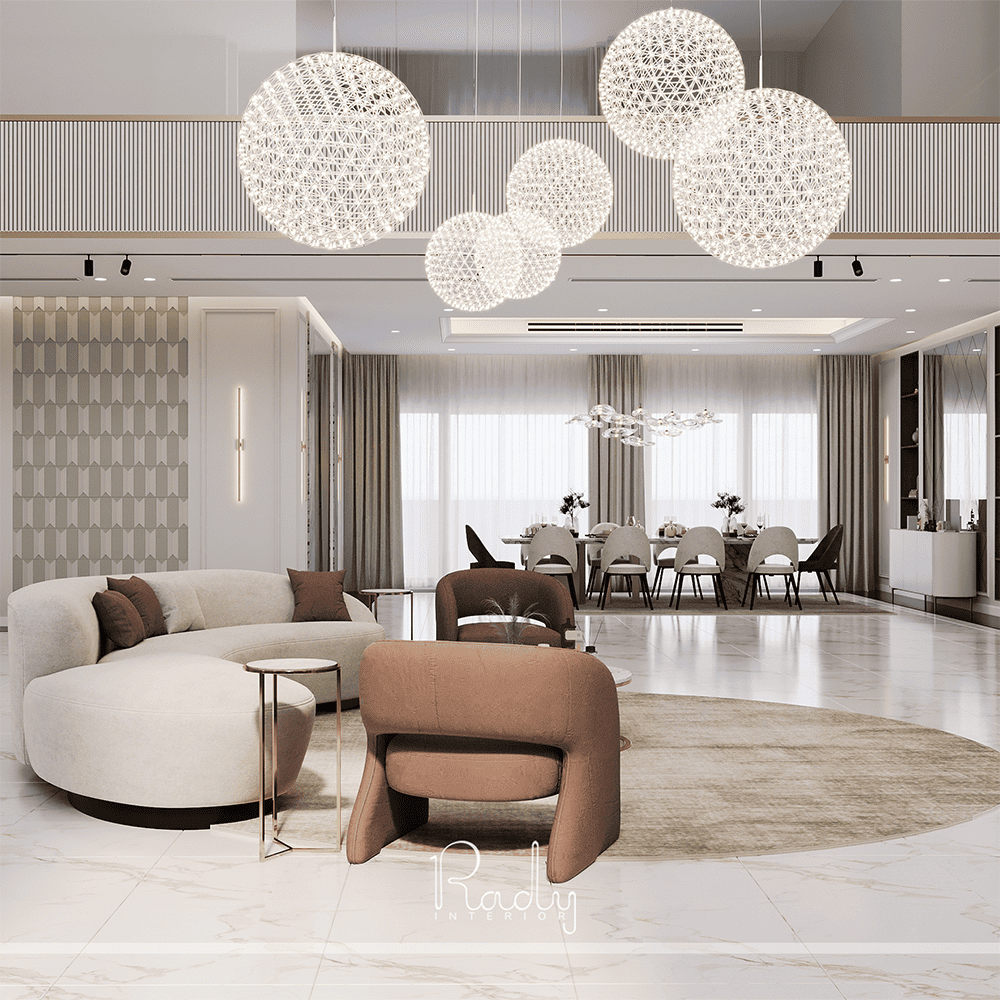


For villas in Palm Jumeirah and Emirates Hills, our approach prioritizes:
- Ceiling TV lifts instead of visible mounts
- Joinery-integrated control hubs (no exposed wiring)
- Acoustic wall panels concealing speakers + wiring
- Mirror TVs in dressing rooms & lounges
- Invisible hallway motion lighting for circulation at night
Technology becomes a lifestyle layer, not an aesthetic interruption.
What Homeowners Should Ask Their Designer
Before starting a project, ask:
- How will screens be hidden when not in use?
- Will audio be integrated, not added after?
- Can wiring, hubs, and routers be planned in the joinery stage?
- Are ventilation + maintenance access accounted for?
- Will lighting and AC controls follow the design language, not break it?
If the answer is no, the project will end up cluttered.
Consultation & Fit-Out (Dubai & UAE)
Invisible smart home integration is a design + fit out collaboration, not a post installation fix.
If you’re planning a villa, Luxury penthouse, or luxury apartment project,
RadyInterior offers:
- Smart tech integration during concept & 3D design
- Bespoke joinery manufacturing to hide equipment
- Fit out execution with concealed wiring systems
- Coordination with automation brands (Control4, Lutron, Savant, KNX)
FAQs
Smart home devices can be hidden by integrating screens into joinery, using recessed wall panels for speakers, concealing wiring inside cabinetry, and replacing visible hubs with router cabinets. This allows full automation while keeping luxury interiors visually clean.
Yes. Invisible automation works for villas, penthouses, and apartments. Systems are planned during joinery or fit-out so devices disappear behind custom panels, ceilings, and built in furniture ideal for luxury spaces in Dubai.
Common hidden devices include smart speakers, TV screens, routers, voice assistants, lighting sensors, security hubs, and even climate controls. These are installed behind furniture lines so the room looks uncluttered.
During renovation or fit out, wiring routes are planned in advance. Cabling goes behind panel systems, false walls, or in furniture voids so nothing is exposed. This prevents visible cables and keeps the interior premium and hotel grade.
Living rooms, bedrooms, home offices, entertainment rooms, and majlis areas benefit the most. These spaces often need automation but can’t afford visible tech clutter if positioned as luxury interiors.
Pricing can be higher because of custom joinery and planning, but the investment protects aesthetics and increases property value. It also avoids future rework or visible retrofits, making it a better long-term solution.
Conclusion
The future of luxury interiors is not about displaying technology.
It’s about hiding it so the space can breathe.
A luxury home should feel effortless.
If the technology is noticeable, it’s not luxury it’s just hardware.
Hidden tech is the new premium.

Expert Villa Landscape Design: Al Hamidiya 2 Project Reveal
This project documents the transformation of a private villa in Al Hamidiya 2, UAE, where an undevel

Modern Arabic Majlis Design in Dubai: From Tradition to Luxury Seating
A Majlis is a traditional Arabic sitting space designed for hospitality, conversation, and hosting g

Grand Entrances: Designing a Foyer That Makes a Statement
Villa entrance design plays a critical role in shaping first impressions by defining scale, luxury,
