

Office Interior Design in Dubai: Layouts That Improve Productivity & ROI
Office interior design in Dubai directly impacts productivity, employee retention, and operational costs. Strategic layouts that balance focus, collaboration, acoustics, and flexibility help businesses reduce wasted space, improve performance, and generate measurable return on investment. In 2026, offices designed for hybrid work and employee wellbeing consistently outperform traditional layouts.
Introduction: Why Office Design Is No Longer an Aesthetic Decision
Many businesses in Dubai still treat office interior design as a visual exercise.
But in 2026, office design is no longer about furniture or finishes.
It is about performance.
Decision makers are asking different questions:
- Why are teams distracted despite premium offices?
- Why does space feel underused?
- Why is staff turnover increasing even with competitive salaries?
The answer often lies in how the office is designed not how it looks.
This article explains how office interior design in Dubai affects productivity, efficiency, and ROI and which layouts actually work.
How Office Interior Design Impacts Business Performance
Office interiors influence performance in three measurable ways:
1. Focus and Cognitive Load
Poor layouts increase noise, interruptions, and visual clutter reducing deep work capacity.
2. Space Efficiency
Inefficient planning leads to empty desks, overcrowded zones, and wasted rent.
3. Employee Retention
Workspaces that ignore comfort, privacy, and flexibility contribute to burnout and attrition.
In Dubai’s competitive business environment, these issues directly affect profitability.
The Shift from Traditional Offices to Performance-Driven Layouts
Why Old Office Layouts Are Failing
- Fixed desks no longer match hybrid work patterns
- Large open plans amplify noise and distraction
- Meeting rooms are either overbooked or underused
These layouts were built for attendance not output.
The 4 Office Zones That Improve Productivity
High performing offices in Dubai now follow activity based zoning rather than fixed seating.
1. Focus Zones (Deep Work Areas)

Purpose:
- Concentration
- Individual productivity
- Reduced interruptions
Design considerations:
- Acoustic treatment
- Visual separation
- Controlled lighting
These zones support tasks that generate the most value but are often ignored.
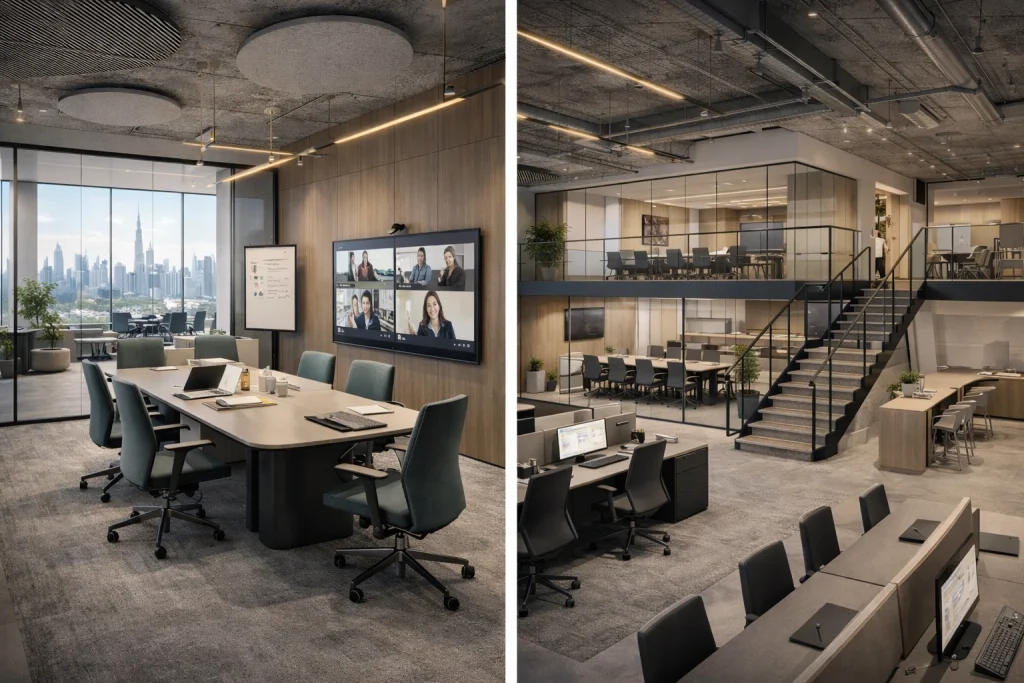
2. Collaboration Zones (Team & Meeting Spaces)
Purpose:
- Brainstorming
- Hybrid meetings
- Cross-department communication
Design considerations:
- Integrated technology
- Acoustic balance
- Flexible furniture
Poorly designed collaboration spaces waste time rather than create it.
3. Transition Zones (Circulation & Informal Interaction)
Purpose:
- Movement
- Short discussions
- Mental reset
Design considerations:
- Clear pathways
- Informal seating
- Visual openness
These zones reduce friction and prevent work areas from becoming congested.
4. Wellness & Recovery Zones
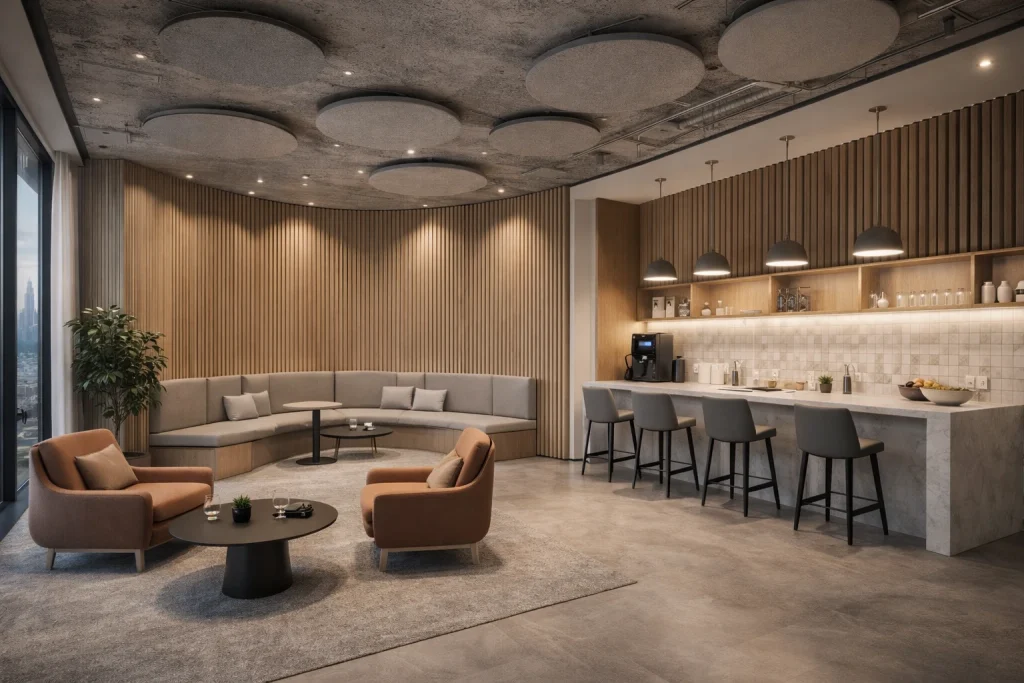
Purpose:
- Reduce fatigue
- Support long working hours
- Improve retention
Design considerations:
- Natural light
- Ergonomic furniture
- Quiet break areas
In Dubai’s fast-paced corporate culture, recovery spaces are no longer optional.
Office Interior Design and ROI: Where the Real Value Comes From
ROI in office design is not measured by finishes it is measured by outcomes.
Key ROI Drivers
- Reduced absenteeism
- Improved focus time
- Better use of leased space
- Lower churn and recruitment costs
A well planned office reduces hidden operational expenses that rarely appear in design budgets.
Hybrid Work: Designing Offices That Are Used, Not Empty
Many Dubai offices are now partially vacant on any given day.
The solution is not downsizing it is replanning.
Effective layouts:
- Reduce fixed desks
- Increase shared resources
- Allow spaces to serve multiple functions
This flexibility improves utilization and lowers cost per employee.
Common Office Design Mistakes That Hurt Productivity
- Over emphasis on open plans
- Ignoring acoustics
- Insufficient meeting room variety
- Poor lighting hierarchy
- Design without operational input
These mistakes often result in expensive redesigns within a few years.
Office Interior Design in Dubai: Local Factors That Matter
Dubai offices face unique conditions:
- Long working hours
- Multinational teams
- High client-facing expectations
- Regulatory and landlord constraints
Layouts must balance performance with compliance and image especially in Grade A buildings.
Who Benefits Most from Performance-Led Office Design
This approach is especially effective for:
- Corporate headquarters
- Professional services firms
- Tech and consulting companies
- Regional offices managing hybrid teams
For these businesses, design decisions directly influence output.
Interior Design vs Office Fit-Out: What Businesses Need to Know
Interior design defines how the office should function.
Fit-out delivers how it is built and executed.
In high-value offices, separating the two often leads to misalignment, delays, and cost overruns. Integrated delivery reduces these risks.
Conclusion: Your Office Is a Business Tool, Not a Cost Center
Office interior design in Dubai should not be treated as a decorative expense.
When planned strategically, it becomes:
- A productivity multiplier
- A retention strategy
- A space efficiency solution
The most successful offices in 2026 are not the most impressive visually but the most effective operationally.
FAQs
Yes. Layout, acoustics, lighting, and zoning directly affect focus, collaboration, and employee wellbeing.
Yes. Offices are now designed for flexibility rather than fixed attendance.
Designing for appearance instead of daily operations and workflows.

Luxury Office Renovation Ideas Dubai: Redefining Corporate Spaces
Dubai is known for its luxury and innovation, and this is true for office spaces, too. A well-design

How to Design Your Dream Bedroom with a Touch of Luxury
Introduction Bedroom interior design means making a bedroom both beautiful and useful. It comes with

What Is Cafecore? Aesthetic Interior Trend Taking Over UAE Cafés and Homes
In the heart of UAE homes and cafés, a warm trend called Cafecore aesthetic UAE is brewing. It̵
